
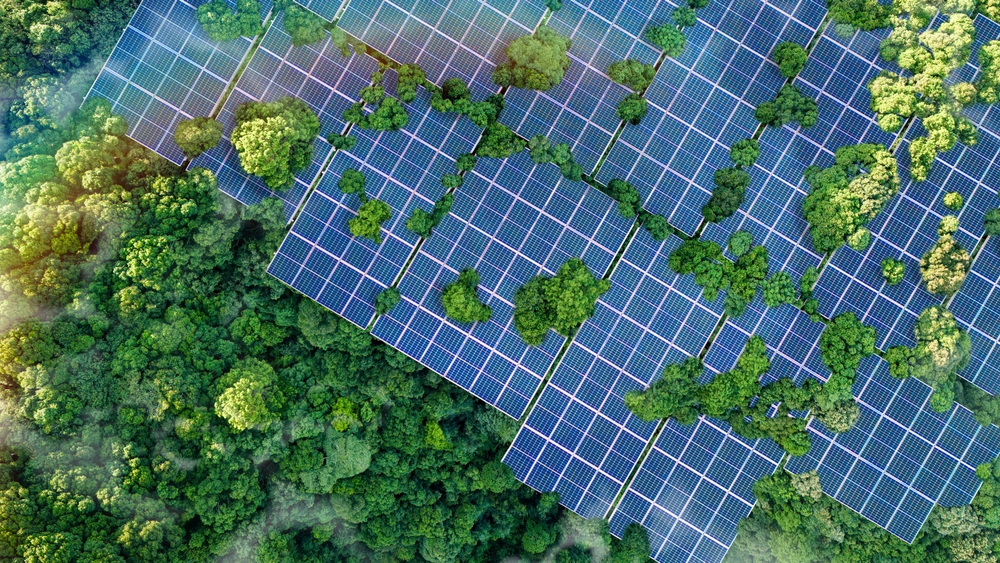
As the use of solar panels becomes more prevalent, commercial lenders will increasingly encounter buildings and parking fields equipped with these systems. Lenders are likely to encounter three main scenarios: (i) the building owner owns the solar panels, (ii) the building owner leases the roof or parking field to a third party for solar panel installation, or (iii) the building owner leases the solar array through a power purchase agreement (PPA) without owning the panels or system. Each scenario carries distinct implications for lenders, which are important to understand to navigate solar-related financing.
1. Building Owner Owns the Solar Panels
In cases where the building owner also owns the solar panels, lenders should treat the solar array similarly to any other asset or fixture owned by the property owner. A UCC-1 fixture filing should be made on the solar array, although it’s worth noting that the lender may not be the first in line if the solar array were financed separately. Additionally, lenders should file a UCC-9 and ensure that loan documents include provisions securing the property owner’s interest in the Investment Tax Credit (ITC) associated with the solar panels. While it remains unsettled whether a secured interest in the ITC can be perfected with a UCC-9 filing, some evidence suggests this could be effective. It may also be advantageous for lenders financing the acquisition or refinancing of the property to refinance the existing solar panels as well. This ensures priority under both the UCC-1 and UCC-9 filings and allows the lender to benefit from the 30% ITC. Notably, loans for solar arrays typically have a 20-year repayment period.
2. Building Owner Leases the Roof to a Third Party
If the building owner leases the roof or parking field to a third-party owner (TPO) of the solar array and only receives rental income, this arrangement should be treated like any other lease. The lender can capture it through the standard assignment of leases and rents, ensuring the regular payment flows are secured.
3. Building Owner Leases the Solar Array from a TPO
In cases where the building owner leases the solar array from a TPO, the arrangement usually involves a power purchase agreement (PPA) and a UCC-1 fixture lien by the TPO on the solar panels and the Solar ITC. The PPA is a contract between the solar system owner and the property owner, allowing the building to host a solar power system without upfront costs. The TPO typically files a UCC-1 fixture filing to protect its interest in the solar property in case the borrower defaults.
Many long-term solar leases function as installment sales, with the property owner gaining ownership over time. Lenders can generally determine if the lease is closer to a sale by checking whether the property owner can purchase the array for a nominal fee at the end of the lease term and who benefits from the Solar ITC. If the structure of the lease resembles an installment sale, it is prudent for lenders to file both a UCC-1 and UCC-9 to secure their interests in the panels and the ITC, even if they may not hold the first position.
Conclusion
Understanding how solar panel ownership and leasing structures affect financed properties is crucial for managing risk and maximizing security. By familiarizing themselves with the various filing requirements and potential benefits, such as the Solar ITC, lenders can better protect their interests and take advantage of opportunities in an increasingly solar-powered commercial real estate market.